Niacinamide is a form of vitamin B3. A niacinamide serum helps the skin barrier hold moisture, helps balance oil, makes open pores look less noticeable, calms redness and, with steady use, helps even out dark marks. It is gentle enough for most skin types, including sensitive skin, and you can use it once or twice a day, morning or night.
Niacinamide (vitamin B3) serum benefits at a glance
- Less shine: it may help regulate how much oil the skin makes. In one study, a 2% niacinamide product lowered the rate of facial oil production after a few weeks.
- Pores look smaller: nothing has been proven to shrink pores, but less oil and a healthier barrier make them look less noticeable.
- A stronger skin barrier: it may help the skin make more of its own lipids (fats), which keeps moisture in and irritants out. Skin that stings easily often feels calmer.
- Calmer, less red skin: it may soothe redness and blotchiness, including the irritation strong exfoliants or retinol can cause.
- More even tone: it is thought to slow the transfer of pigment to the skin's surface cells. In a study of 5% niacinamide, dark spots looked lighter after about four weeks of use.
- Smoother-looking texture: by supporting the barrier and hydration, it can soften a rough, uneven or "orange-peel" look.
Vitamin B3 serum: niacinamide, nicotinamide or niacin?
A "vitamin B3 serum" or "B3 serum" is almost always a niacinamide serum. Niacinamide and nicotinamide are two names for the same ingredient, so you may see either on the label. Niacin (nicotinic acid) is a different form of vitamin B3: taken as a supplement it can cause flushing, and it is not what face serums use. When you compare products, look for niacinamide and its percentage in the ingredient list, not just "B3" on the front of the box.
Niacinamide serum uses, by skin concern
Oily skin and open pores
This is where most people notice niacinamide first. In Pakistan's humid summers, skin that is shiny by midday and pores that look stretched on the nose and cheeks are common. Use the serum morning and evening, follow with a light, oil-free moisturiser, and blot rather than wipe during the day. Our guide to sunscreen for oily skin covers the rest of a summer routine.
Pimple marks and dark spots
The brown or dark marks that stay after a pimple heals are pigment, not scars. Niacinamide helps even them out over several weeks, and it works well alongside vitamin C, alpha arbutin or kojic acid. Daily sunscreen matters more than any serum here, because sun keeps marks dark. Niacinamide does not change your natural skin colour; it works on marks and unevenness.
Redness and sensitive skin
Because it supports the barrier and is not acidic, niacinamide is one of the few active ingredients most sensitive skin tolerates. Start once a day and build up.
Dry or dehydrated skin
Niacinamide helps skin hold on to water, so it suits dry skin too. Pair it with a hyaluronic acid serum and a richer moisturiser in winter.
Acne-prone skin
Niacinamide can help with the oiliness and redness that come with breakouts, and it is often used alongside acne treatments because it is gentle. It is not a treatment for active, painful or cystic acne: see a doctor or dermatologist for that.
Why niacinamide is paired with zinc PCA
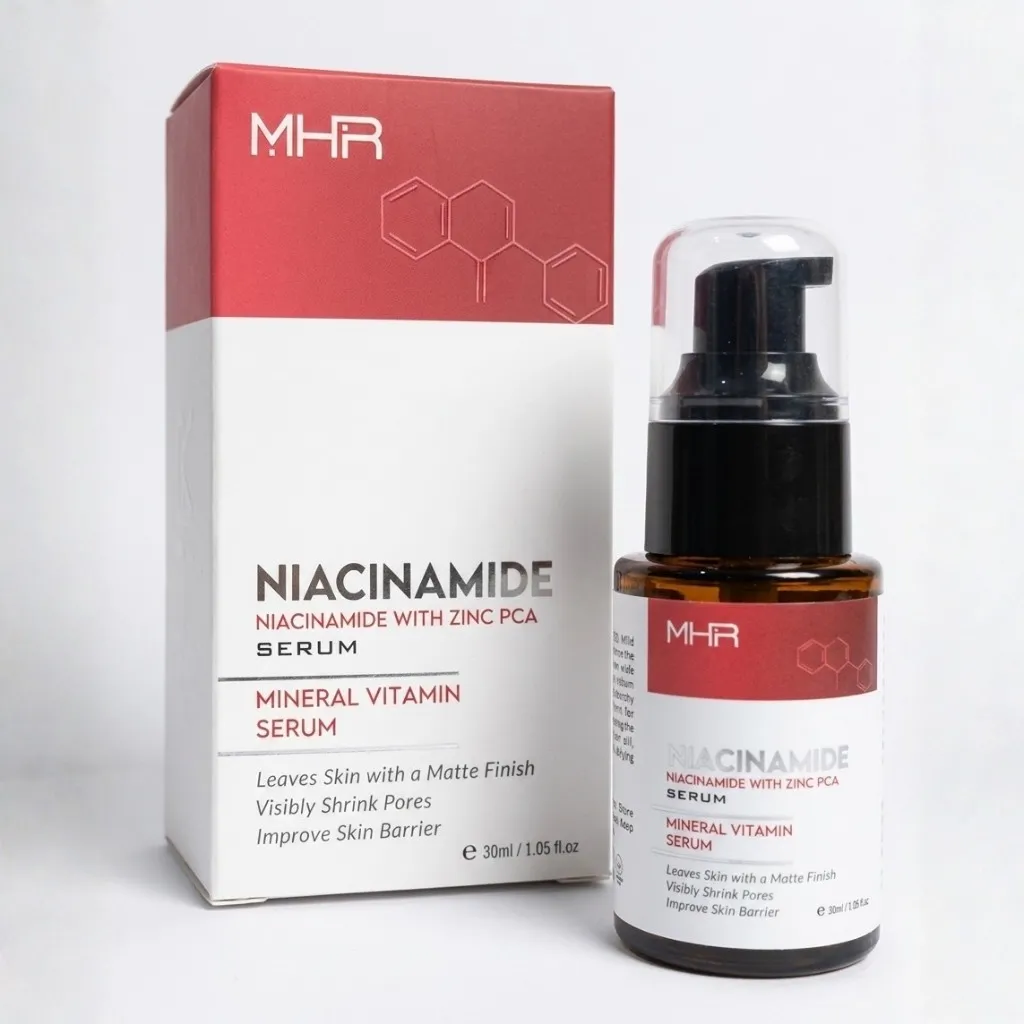
Zinc PCA is zinc bound to PCA, a natural moisturising factor found in skin. Zinc is widely used in products for oily skin to help keep shine in check and calm redness, and PCA helps hold moisture. Together with niacinamide, the aim is less oil without dryness. That is the thinking behind our Niacinamide with Zinc PCA Serum.
What strength to use
Most skincare products contain 5% niacinamide or less, and the studies above used 2% to 5%. Higher is not automatically better: very strong formulas are more likely to cause tingling or redness. If your skin is sensitive, start with a lower strength and build up.
How to use a niacinamide serum
- Wash your face. Slightly damp skin is fine.
- Spread a few drops over your face and press them in.
- Let it absorb for a minute, then follow with moisturiser.
- In the morning, finish with sunscreen.
Don't stack several niacinamide products at once: one serum is enough.
Morning or night?
Either, or both. Niacinamide doesn't make skin sensitive to the sun, so it works well in the morning under sunscreen, and at night under moisturiser. Oily skin often does best with twice-daily use; sensitive skin can start with once a day.
Can you mix it with other ingredients?
Yes. Niacinamide is commonly used with hyaluronic acid, ceramide moisturisers, retinol and exfoliating acids, and it can be used with vitamin C. See vitamin C and niacinamide together for how to layer them, and skincare routine order for the full sequence.
How long until you see a difference?
Shine control can feel quicker, often within two to four weeks. Pores, texture, tone and marks usually take eight to twelve weeks of daily use. Take a photo in the same light on day one so you can compare honestly.
Side effects
Reactions are uncommon, but itching, mild burning or redness can happen, especially with strong formulas. Patch test first: apply a little to your forearm or behind your ear and wait 24 hours. Stop if your skin stays irritated.
Questions
Is niacinamide the same as vitamin B3?
Niacinamide (also called nicotinamide) is one form of vitamin B3. In skincare, "vitamin B3 serum" and "niacinamide serum" usually mean the same thing.
What are the main benefits of niacinamide serum for the face?
Less shine, less noticeable pores, a stronger skin barrier, calmer and less red skin, and a more even tone over time, including fading the look of pimple marks.
Can I use niacinamide serum every day?
Yes. Most people can use it once or twice a day. If your skin is sensitive, start once a day and build up.
Does niacinamide lighten skin?
It helps even out dark spots, pimple marks and patchy tone, so skin can look brighter and more uniform. It does not change your natural skin colour.
Should I use niacinamide in the morning or at night?
Either works. It does not make skin sun-sensitive, so you can use it under sunscreen in the morning, under moisturiser at night, or both.
Niacinamide serum kaise lagayein?
Chehra dho kar 3–4 qatre poore chehre par lagayein aur halka sa thapthapayein. Phir moisturiser lagayein, aur subah aakhir mein sunblock. Din mein ek ya do baar lagaya ja sakta hai. Pehli baar istemal se pehle patch test kar lein.
This guide is general information, not medical advice. MHR products are cosmetic care and do not treat medical conditions. For persistent, changing or painful skin or scalp concerns, see a qualified doctor or dermatologist.
Sources
- Cleveland Clinic: Niacinamide, what it is and skin benefits
- The top 10 cosmeceuticals for facial hyperpigmentation (review)
- American Academy of Dermatology: How to control oily skin
- Hakozaki et al.: The effect of niacinamide on reducing cutaneous pigmentation and suppression of melanosome transfer (British Journal of Dermatology, 2002)
- Draelos et al.: The effect of 2% niacinamide on facial sebum production (Journal of Cosmetic and Laser Therapy, 2006)