Exosomes are tiny vesicles, about 30 to 150 nanometres across, that cells release to carry signals such as growth factors and proteins to other cells. In skincare they are used as "signalling" ingredients for radiance and renewal. The research is promising but early, so treat them as a supporting ingredient rather than a miracle one.
Where skincare exosomes come from
Exosomes can be made by human, plant or microbial cells. Cosmetic products often use plant-derived or ferment-derived exosomes. For example, the Leuco-Exo in our Hair Fall Control Exosomes Spray comes from a Leuconostoc ferment with ginseng and camellia.
What the research shows so far
- Most of the evidence comes from lab and animal studies.
- Human studies on skin are few, small and short. A 2024 review counted fewer than 20 skin trials, and only a handful looked at cosmetic concerns.
- Some of the stronger results come from clinics, where exosomes were applied after microneedling or laser treatment, not from creams used at home.
- There is no agreed standard yet for the best source, dose or purity.
So why use them?
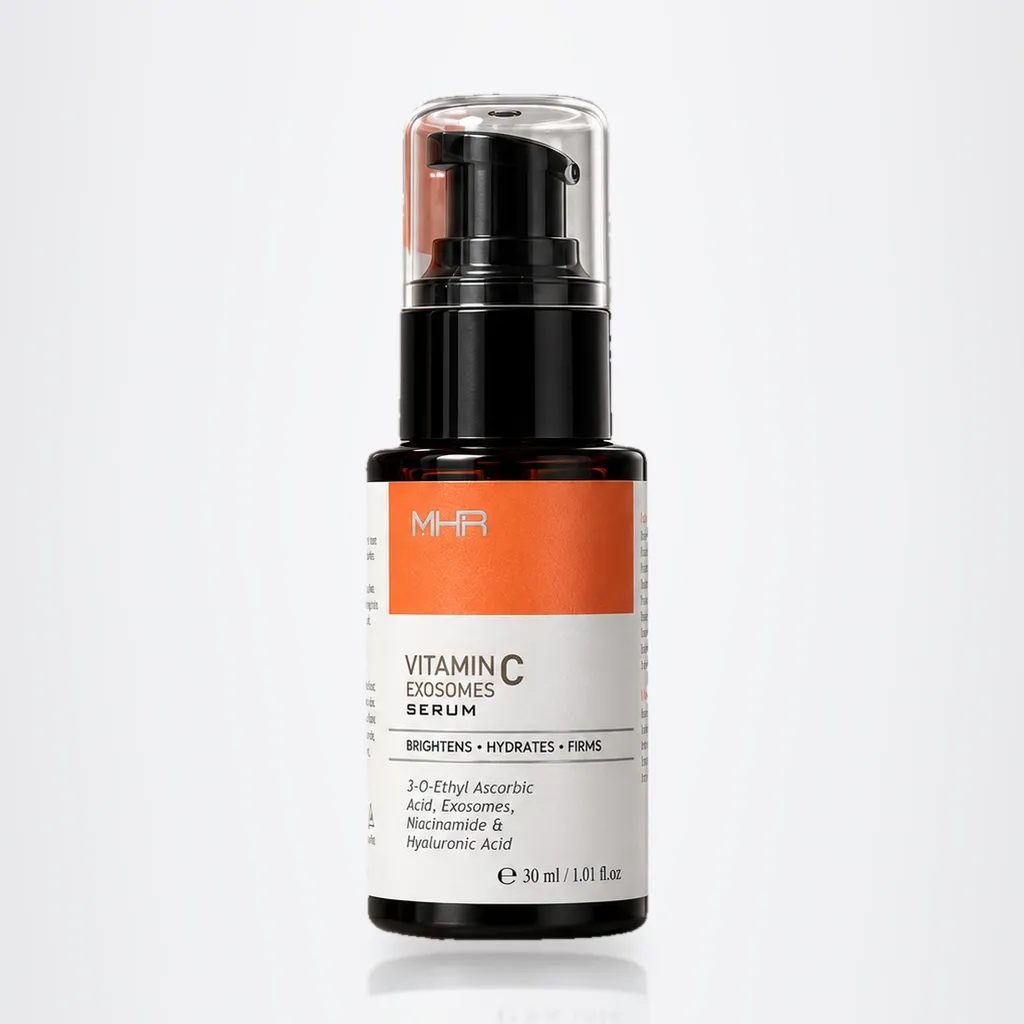
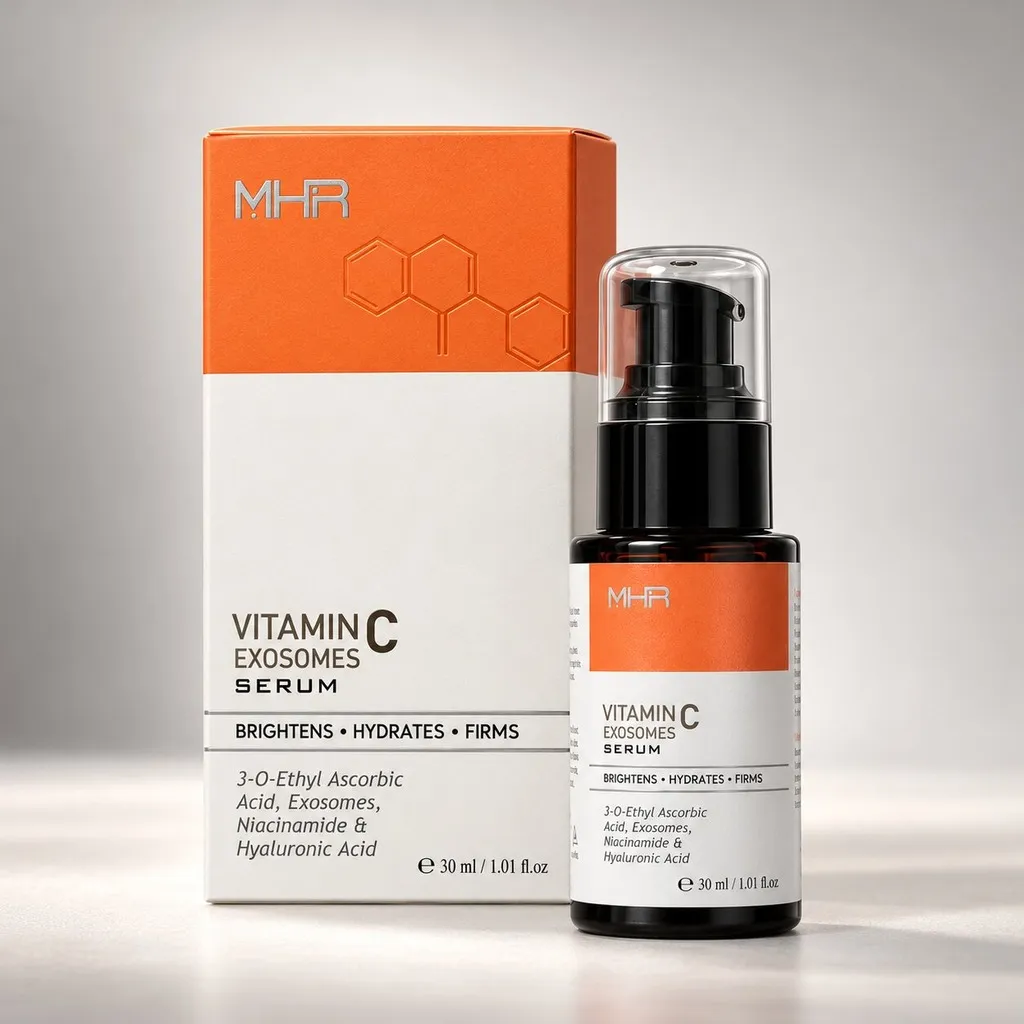
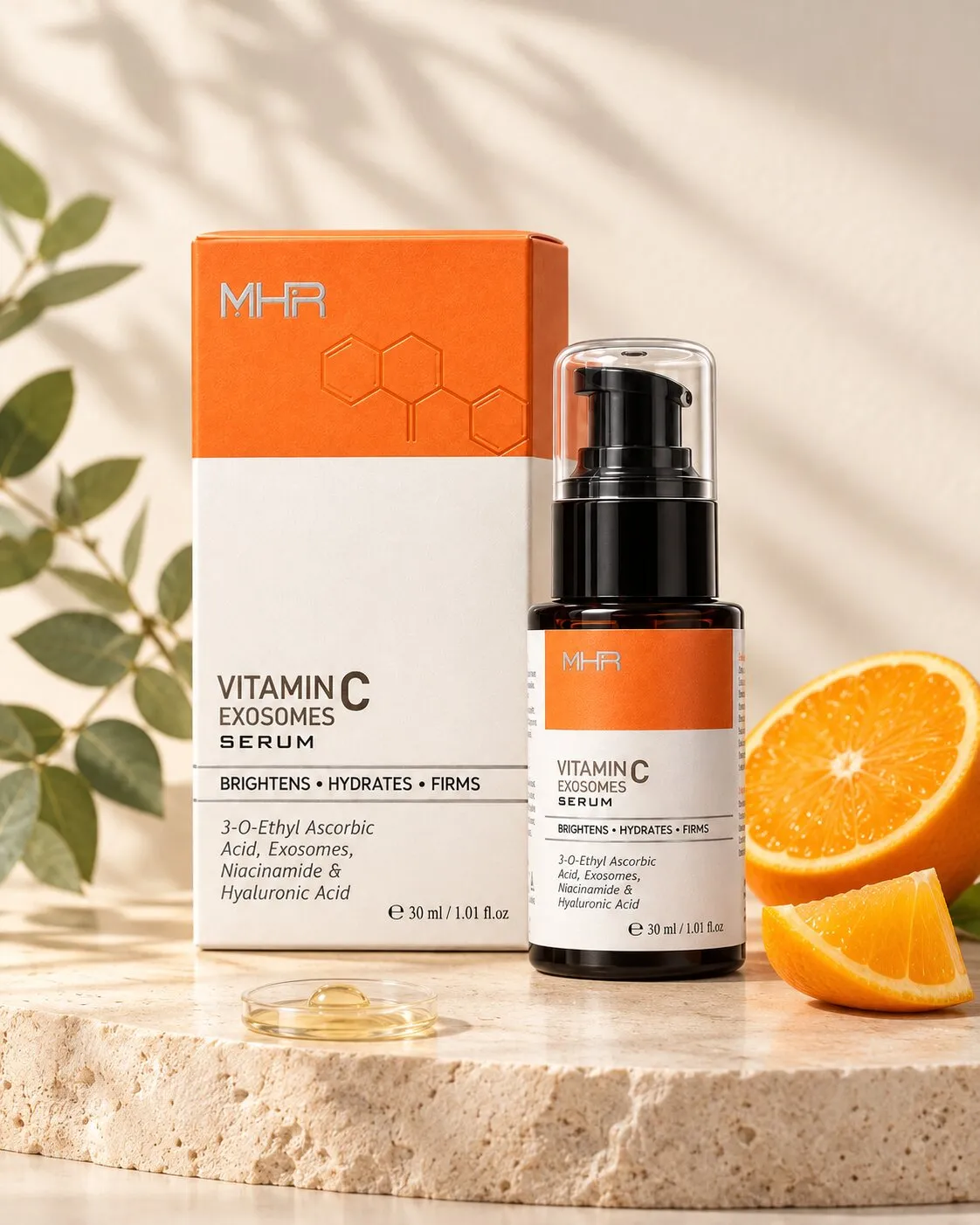
In a well-made product, exosomes sit next to ingredients with a longer track record. Our Vitamin C Exosomes Serum also contains a stable vitamin C (3-O-Ethyl Ascorbic Acid), alpha-arbutin and niacinamide, which do the main work on dullness and dark marks. Our hair spray pairs exosomes with Procapil and Bicapil, complexes made for the scalp.
How to judge an exosome product
- Look at the full ingredient list, not just the word "exosomes".
- Be wary of claims that a cream will treat a medical condition or work like a clinic procedure.
- Give it several weeks of regular use, and keep wearing sunscreen.
- Injected exosomes are a different, medical matter. Only use those with a qualified doctor.
This guide is general information, not medical advice. MHR products are cosmetic care and do not treat medical conditions. For persistent, changing or painful skin or scalp concerns, see a qualified doctor or dermatologist.