Hyaluronic acid is a substance your skin already makes. In a serum, it attracts and holds water, so skin looks plumper and feels softer, and fine lines from dryness are less visible. It suits almost every skin type, including oily and sensitive skin, and reactions are rare. For the best result, apply it to slightly damp skin and seal it with moisturiser.
What is hyaluronic acid serum?
Despite the word "acid", hyaluronic acid doesn't exfoliate or sting. It is a humectant: a large sugar-based molecule with many places where water can attach, so a small amount holds a lot of water. Your body makes it naturally, and levels in the skin fall with age and sun exposure. A hyaluronic acid serum is a light, water-based liquid that puts this hydration back into the skin's upper layers.
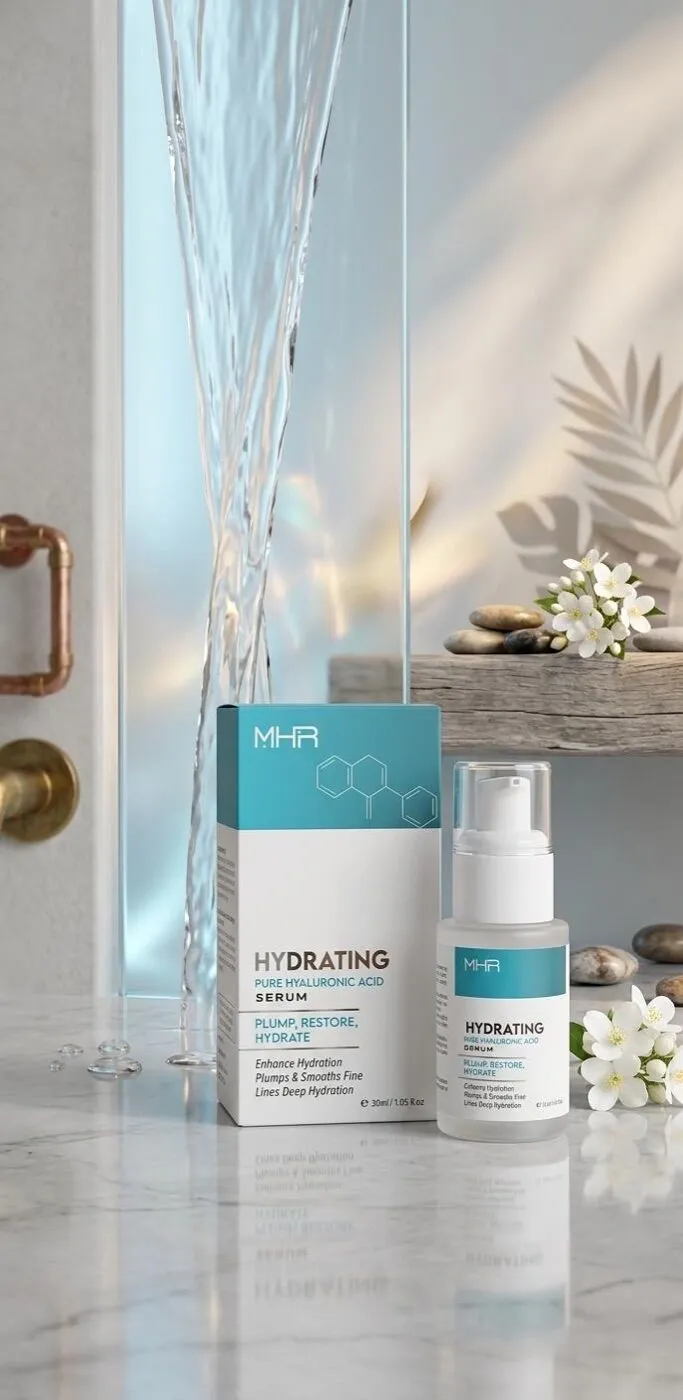
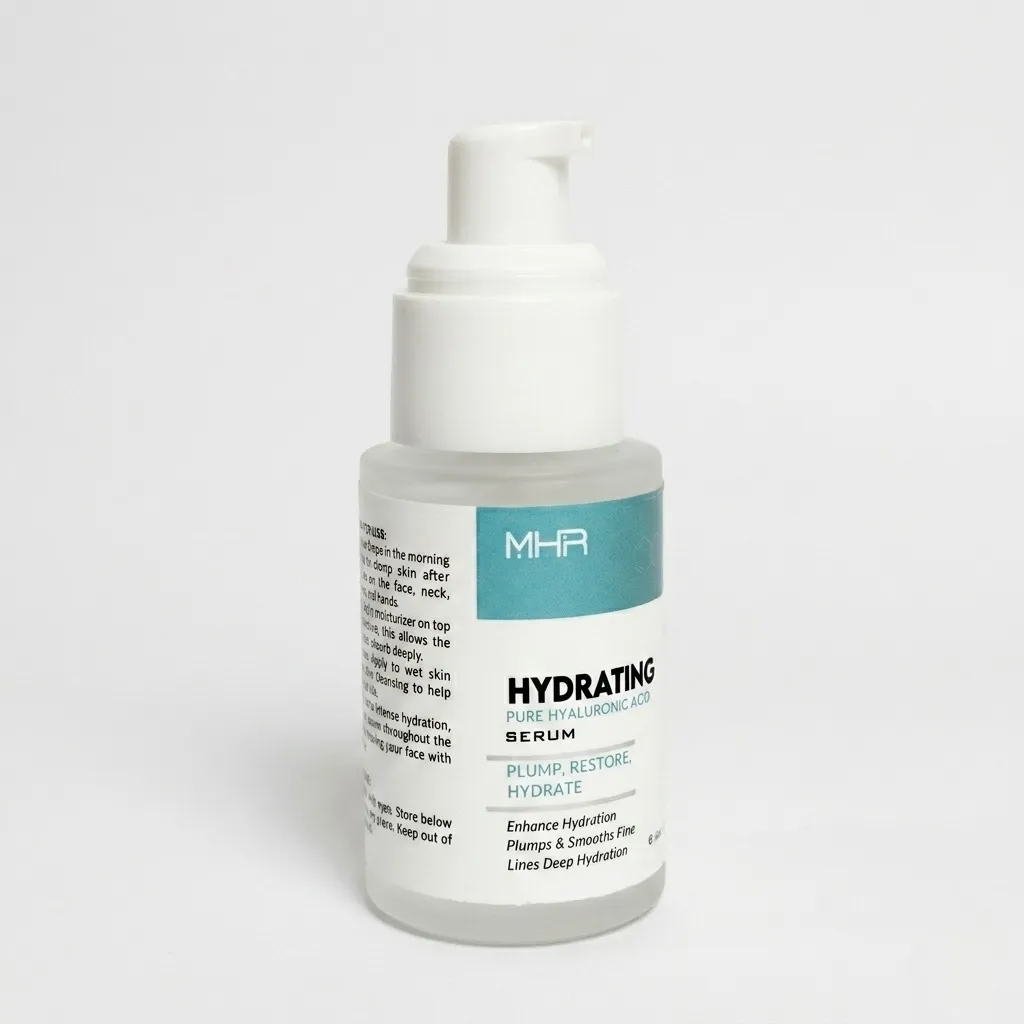
Some formulas, including our Hydrating Pure Hyaluronic Acid Serum, combine more than one molecular weight of hyaluronic acid with glycerin, another ingredient that draws water into the skin.
Benefits of hyaluronic acid serum
- Hydration: skin feels softer and less tight, especially in air-conditioned rooms and winter air.
- Plumper look: well-hydrated skin looks smoother, and fine lines caused by dryness are less visible.
- Better base: moisturiser, sunscreen and makeup go on more evenly over hydrated skin.
- Gentle: it rarely irritates, so it's a good partner for stronger actives such as vitamin C or retinol.
How to use hyaluronic acid serum on your face
- Wash your face and leave it slightly damp (or mist it with water).
- Apply one or two pumps to your face and neck.
- Press and pat it in rather than rubbing.
- Seal it with moisturiser within a minute or two.
- In the morning, finish with sunscreen.
You can use it morning, night or both.
Why damp skin and moisturiser matter
Hyaluronic acid holds on to water, so give it water to hold. In very dry air, a serum on bone-dry skin with nothing on top can leave the face feeling tight, the most common complaint about hyaluronic acid. A moisturiser over the serum keeps that water in the skin.
Who it suits
- Dry or dehydrated skin: the most obvious difference.
- Oily skin: oily skin can still be dehydrated, and dehydrated skin often makes more oil. A water-based serum adds hydration without oil, which suits humid summers in Karachi or Lahore.
- Sensitive skin and skin irritated by actives: it is a gentle partner for vitamin C, niacinamide or retinol.
- Beginners: if you're new to serums, hyaluronic acid is one of the easiest to start with.
It won't treat acne or fade dark spots on its own; evidence for that is limited.
Using it with other serums
Apply thinner, water-based serums first. Hyaluronic acid layers well under or over most of them. A simple morning order is vitamin C, then hyaluronic acid, then moisturiser and sunscreen. In the evening, try niacinamide, then hyaluronic acid, then moisturiser. Our guide to skincare routine order covers the full steps.
What to look for when you buy
- A short, simple formula, without fragrance if your skin is sensitive.
- More than one molecular weight of hyaluronic acid (sometimes listed as sodium hyaluronate and hydrolysed hyaluronic acid).
- A pump or dropper bottle that keeps the serum clean.
Questions
What does hyaluronic acid serum do?
It draws water into the skin and holds it there, so skin feels softer and looks plumper and smoother. It is a hydrating step, not an exfoliant.
Is hyaluronic acid serum good for oily skin?
Yes. Oily skin can still be dehydrated. A light, water-based hyaluronic acid serum hydrates without adding oil and won't clog pores.
Can I use hyaluronic acid serum every day?
Yes, morning and night. It is one of the gentlest skincare ingredients, and reactions are rare.
Why does my skin feel tight after hyaluronic acid?
Usually because it went on bone-dry skin with no moisturiser on top, in dry air. Apply it to damp skin and seal it with moisturiser.
Do I apply hyaluronic acid before or after moisturiser?
Before. Serum first, on slightly damp skin, then moisturiser, then sunscreen in the morning.
Hyaluronic acid serum kaise lagayein?
Chehra dho kar halka geela chhor dein. 1–2 pump serum chehre aur gardan par thapthapa kar lagayein, phir moisturiser lagayein. Subah aakhir mein sunblock lagayein. Ye har skin type ke liye hai, oily skin ke liye bhi.
This guide is general information, not medical advice. MHR products are cosmetic care and do not treat medical conditions. For persistent, changing or painful skin or scalp concerns, see a qualified doctor or dermatologist.