The best tinted sunscreen for you is broad spectrum, SPF 30 or higher, uses a tint that suits your skin tone, and feels light enough that you'll wear it every single morning. In Pakistan, where the summer UV index often reaches the very high to extreme range and heat makes heavy creams uncomfortable, that last point matters as much as the number on the tube. This guide explains what to look for, how to tell formulas apart, and how to wear a tinted SPF 60 properly.
What is a tinted sunscreen?
A tinted sunscreen is a sunscreen with added pigment, usually iron oxides. The pigment does two things. It evens out the look of your skin, a little like a sheer base, and it helps cover the grey or white cast that mineral filters can leave. Iron oxides also help protect against visible light. Ordinary sunscreens are designed for ultraviolet (UV) light, but a review of tinted sunscreens found that visible light can also cause pigmentation, particularly in medium and deeper skin tones, and that iron oxides help block it.
A tinted sunscreen is not a foundation. It won't give full coverage, and its first job is protection.
Mineral vs chemical: which filters?
Look at the active ingredients on the label. Zinc oxide and titanium dioxide are mineral (physical) filters. Other UV filters make it a chemical sunscreen. Both protect well when they're broad spectrum and applied properly.
| Mineral | Chemical | |
|---|---|---|
| Active filters | Zinc oxide, titanium dioxide | Other UV filters |
| Sensitive skin | Often recommended by dermatologists | Depends on the formula |
| Common downside | White cast, unless it's tinted | Can sting, especially near the eyes |
| With a tint | Cast covered, visible light filtered | Tint adds visible-light cover |
A tinted mineral formula combines the gentleness of zinc oxide with a finish that doesn't look chalky. Our guide to mineral vs chemical sunscreen goes into more detail.
Finding a tint for Pakistani skin tones
Skin tones across Pakistan range from fair to wheatish, olive, brown and deep, often with warm or olive undertones. Plain zinc oxide tends to look grey or ashy on wheatish and deeper skin, which is the main reason people give up on mineral sunscreen. A well-made tint fixes that.
- Test on your jawline, not the back of your hand, and look in daylight.
- Use the full amount when you test. A thin smear looks different from a proper layer.
- Give it a few minutes. Tinted mineral sunscreens often look lighter for the first minute, then settle into the skin.
- Expect some variation. One tint can't match every tone exactly. You're looking for "no visible cast", not a perfect foundation match.
Oily, dry or sensitive skin?
- Oily or acne-prone: choose a formula labelled non-comedogenic and oil-free, and avoid heavy fragrance. The American Academy of Dermatology suggests zinc oxide or titanium dioxide for oily, breakout-prone skin. Our guide to tinted sunscreen for oily skin has more.
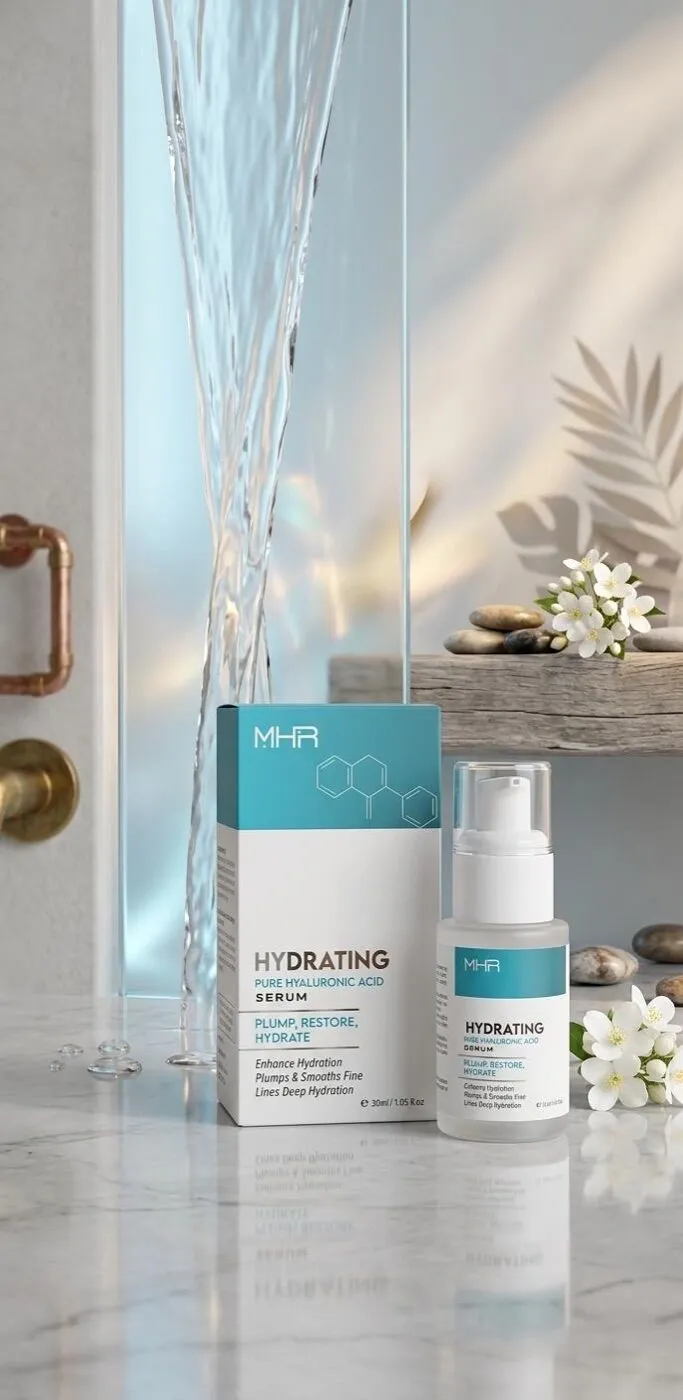
- Dry: mineral sunscreens can feel drier, so put a hydrating step underneath. A hyaluronic acid serum and a light moisturiser help the tint go on evenly.
- Sensitive: mineral filters and a fragrance-free formula are the safest place to start. Patch test on a small area first.
How much to apply: two finger-lengths
The SPF on a label is measured with a generous layer, and most people apply far less, which means far less protection. A simple rule of thumb is to squeeze two lines of sunscreen along the length of your index and middle fingers. That covers your face and neck. Spread it evenly, including the sides of your nose, your hairline, ears and the back of your neck, as the last step of your morning skincare, and allow about 15 minutes before going out.
Reapplying in Pakistan's heat
Reapply about every two hours when you're outdoors, and straight after sweating, swimming or wiping your face. A higher SPF doesn't change this. On a hot day in Karachi or Lahore, sweat and wiping wear sunscreen off long before the SPF number would. If you're mostly indoors, reapply before you head out in the afternoon.
Is SPF 60 worth it over SPF 50 or 30?
SPF 30 filters about 97% of UVB rays, SPF 50 about 98%, and SPF 60 slightly more. The extra protection is real but small. A higher SPF gives you more margin when you don't apply quite enough, which is useful in a strong summer sun, but it never replaces applying enough and reapplying.
Sunscreen, dark marks and uneven tone
Dark marks after spots, patches on the cheeks and an uneven-looking tone are some of the most common skin concerns in Pakistan, and sun exposure keeps them around for longer. UV and visible light both play a part. That's why a tinted sunscreen with iron oxides is worth considering if marks are your main worry: it covers UV and adds visible-light protection that untinted formulas don't.
Brightening products such as vitamin C serums or creams with kojic acid and alpha arbutin work best alongside daily sunscreen. Without it, marks can come back as fast as they fade. Our guide to dark spots and the ingredients that target them explains how they compare. For persistent or changing patches, see a dermatologist.
Keeping your sunscreen in good condition
Heat can break down sunscreen and change its texture. Don't leave the tube in a parked car or on a sunny windowsill, close the cap after each use, and check the expiry date on the pack. If the texture separates, smells different or the tint looks patchy even after shaking, replace it. Mineral sunscreens with a tint can settle, so shake the tube before each use.
A buying checklist
- Broad spectrum (UVA and UVB), SPF 30 or higher.
- Mineral filters, such as zinc oxide, if your skin is sensitive.
- Iron oxides in the ingredients, for the tint and visible-light protection.
- Non-comedogenic and fragrance-free if you have oily or acne-prone skin.
- Water resistant if you sweat a lot or spend time outdoors.
- A texture and finish you're happy to wear every day.
- A clear ingredient list, an expiry date and the maker's details on the pack.
Where our sunscreen fits
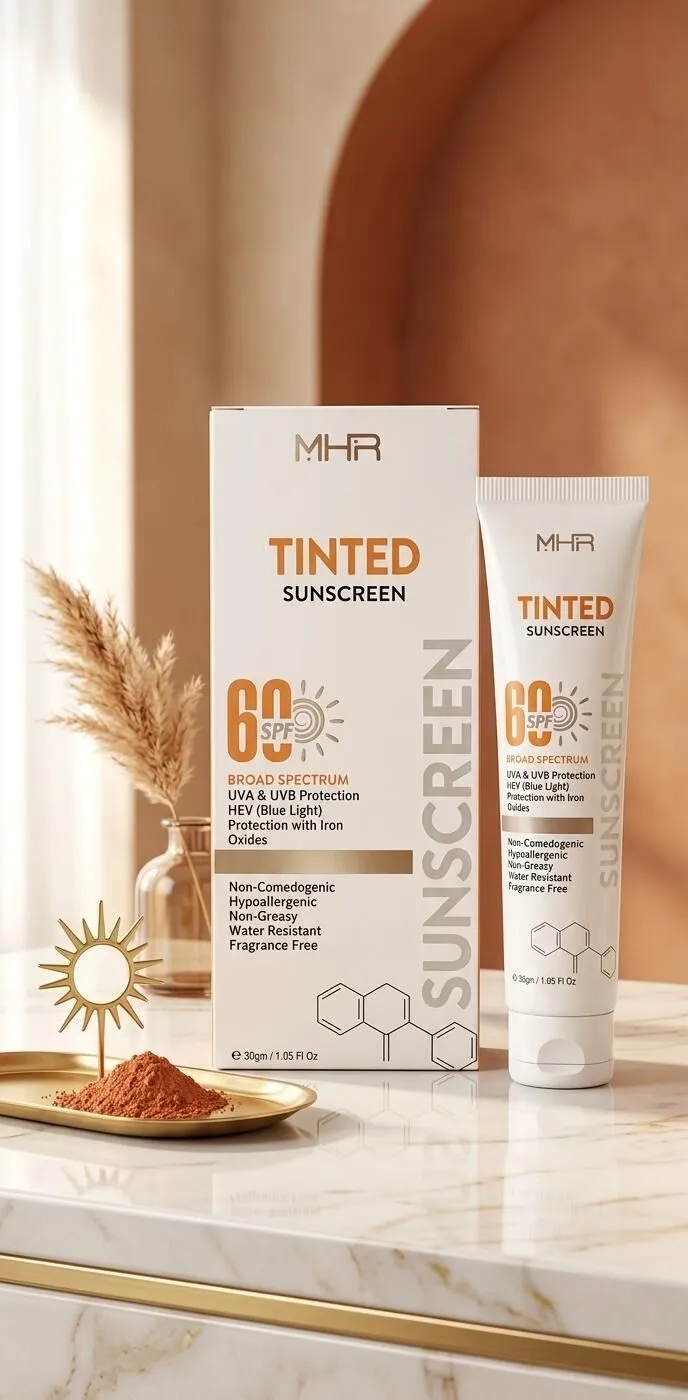
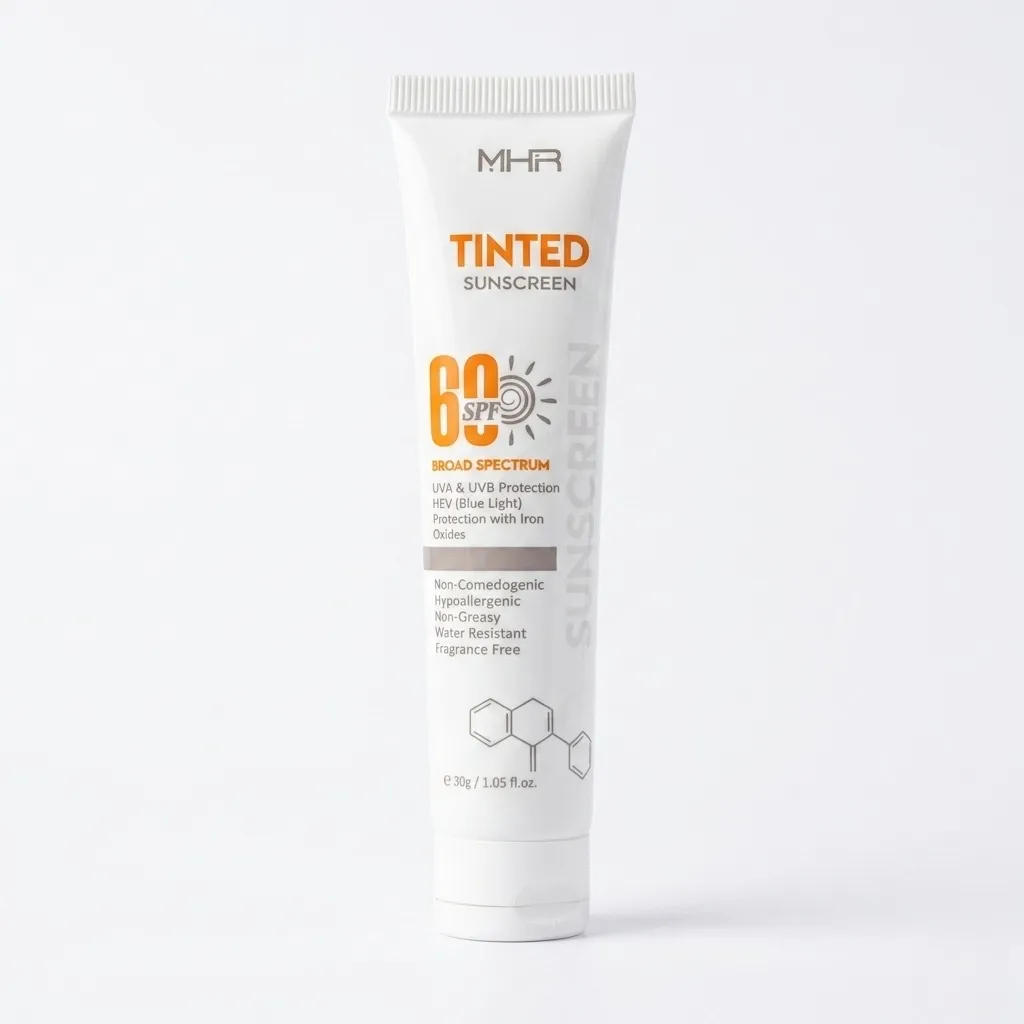
Our tinted sunscreen SPF 60 is a 100% mineral formula with 20% zinc oxide and an iron-oxide tint, made in the UK. It's non-comedogenic, fragrance-free and alcohol-free, with vitamin C, vitamin E, hyaluronate and aloe. Check it against the list above, and see the rest of our tinted sunscreen range.
Common questions
Can I use a tinted sunscreen instead of foundation?
On many days, yes, if you only want a sheer, even look. For more coverage, wear foundation on top once the sunscreen has set.
Do I need sunscreen in winter or on cloudy days?
Yes. UV reaches your skin through cloud, and smog doesn't block it reliably. Wear it whenever you'll be outdoors in daylight.
Does a darker skin tone need sunscreen?
Yes. Anyone can get sun damage, and sun exposure makes dark marks and uneven tone last longer, which is a common concern for wheatish and deeper skin.
Is tinted sunscreen safe around the eyes?
Mineral formulas are usually less likely to sting. Apply gently, avoid the lash line, and rinse with water if it gets in your eyes.
This guide is general information, not medical advice. MHR products are cosmetic care and do not treat medical conditions. For persistent, changing or painful skin or scalp concerns, see a qualified doctor or dermatologist.