The best sunscreen is the one you will wear every day. Both mineral and chemical sunscreens protect your skin when they are broad spectrum, SPF 30 or higher, and applied properly. Choose a mineral formula if your skin is sensitive, and a tinted one if you are prone to dark marks.
How to tell them apart
Check the active ingredients. If they are zinc oxide, titanium dioxide or both, it is a mineral sunscreen, also called a physical sunscreen. Other UV filters mean it is a chemical sunscreen.
| Mineral | Chemical | |
|---|---|---|
| Active filters | Zinc oxide, titanium dioxide | Other UV filters |
| How it works | Absorbs and reflects UV | Absorbs UV |
| Sensitive skin | Recommended by dermatologists | Depends on the formula |
| Common downside | Can leave a white cast | Can irritate sensitive skin |
Why tint matters for dark marks
Ordinary sunscreen is designed for UV. Visible light can also cause pigmentation, particularly in deeper skin tones. A review of tinted sunscreens found that protection against visible light comes from iron oxides and pigmentary titanium dioxide, and that the very fine particles used to reduce white cast do not provide it.
In short, if you have melasma, post-acne marks or uneven-looking tone, a tinted sunscreen with iron oxides is worth considering. It also helps solve the white cast problem, because the tint blends in.
Does a higher SPF mean you can relax?
No. SPF 30 filters out about 97% of UVB rays, and no sunscreen filters out all of them. Higher numbers add a little more protection, but how much you apply and how often you reapply matter more. Reapply about every two hours outdoors, and after swimming or sweating.
Which should you choose?
- Sensitive or easily irritated skin: mineral.
- Dark marks or uneven-looking tone: tinted mineral.
- You dislike any white cast: a tinted mineral, or a chemical formula.
- Oily skin: see our guide to sunscreen for oily skin.
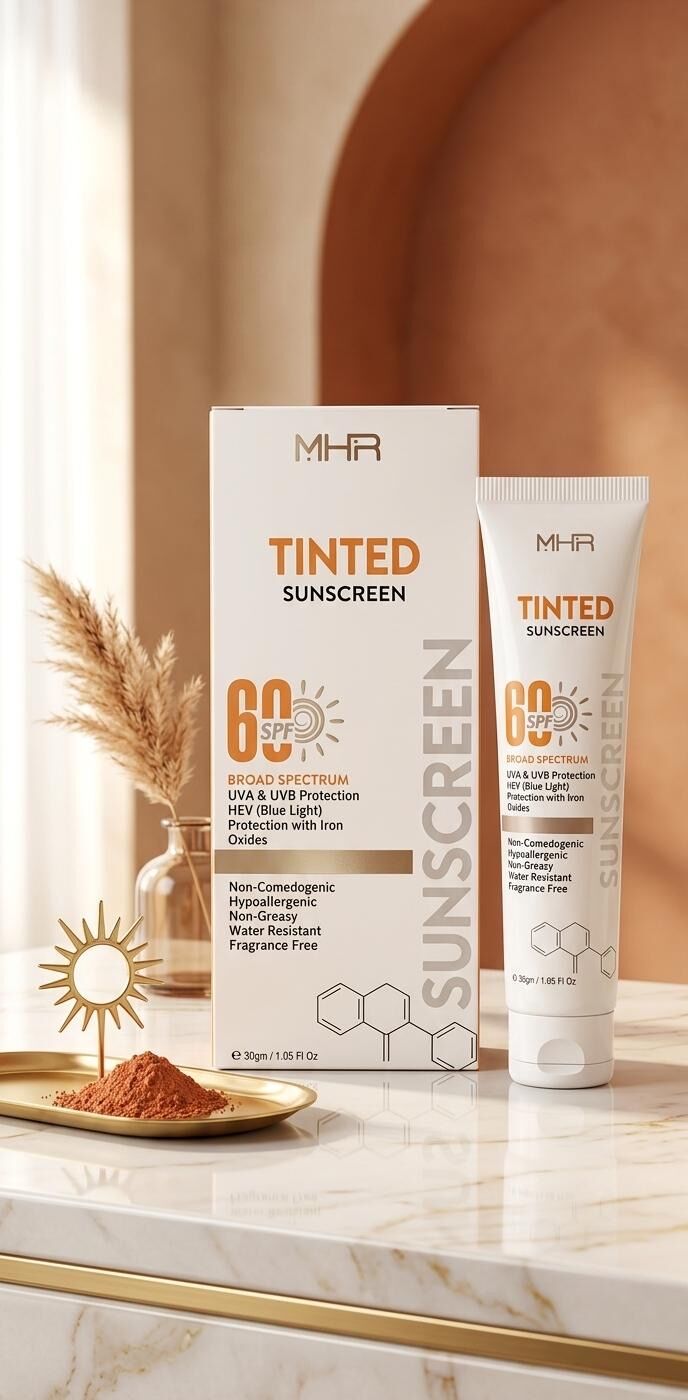
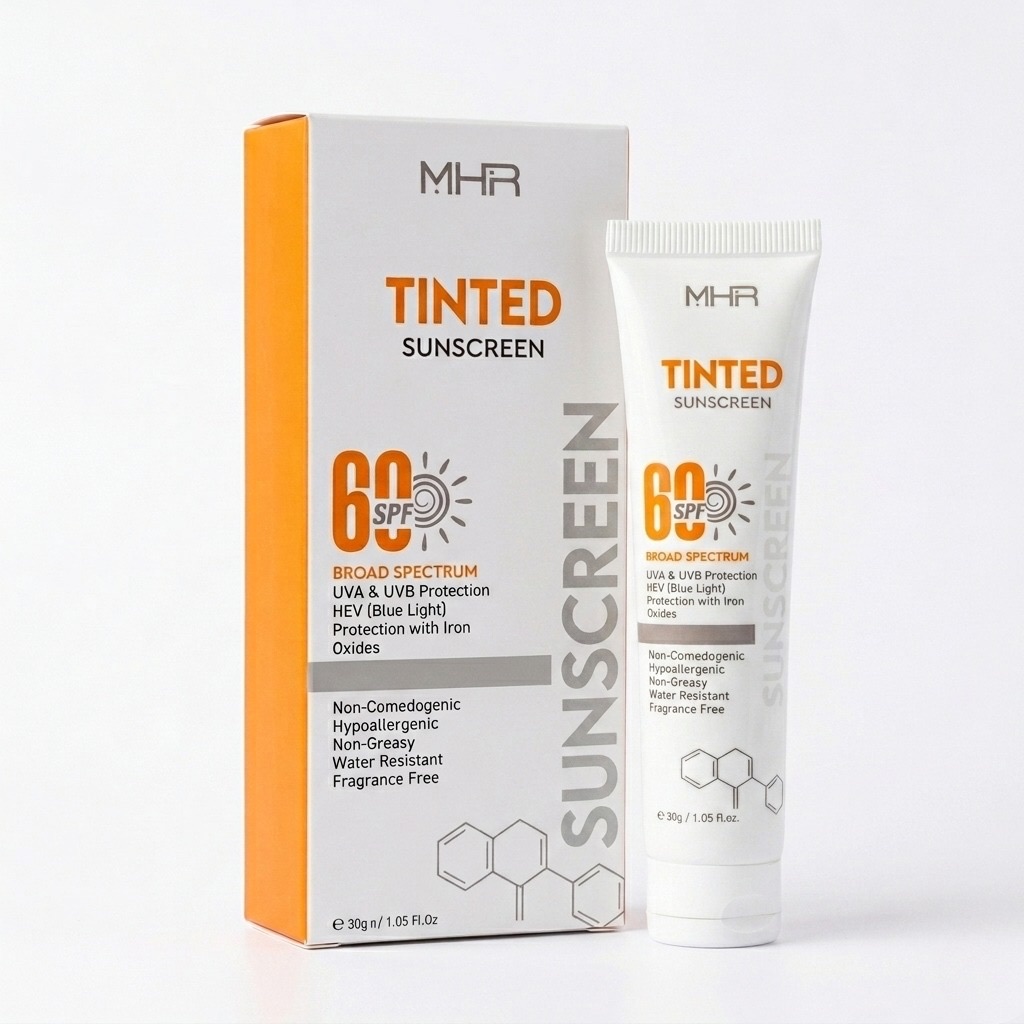
Our Tinted Mineral Sunscreen SPF 60 uses 20% zinc oxide with an iron oxide tint. The tint is designed to blend into a wide range of skin tones, but the finish varies with your tone and how much you apply.
This guide is general information, not medical advice. MHR products are cosmetic care and do not treat medical conditions. For persistent, changing or painful skin or scalp concerns, see a qualified doctor or dermatologist.
Sources
- American Academy of Dermatology: Sunscreen FAQs
- American Academy of Dermatology: How to decode a sunscreen label
- American Academy of Dermatology: How to apply sunscreen
- Lyons et al.: Photoprotection beyond ultraviolet radiation, a review of tinted sunscreens (Journal of the American Academy of Dermatology)