Hair oil and a hair fall spray do different jobs. Oil works mainly on the hair you can see: it conditions the strands, cuts down friction and helps reduce breakage. A leave-in scalp spray with active ingredients goes on the scalp, where hair grows, and is designed for daily scalp care. Many people do well using both. Neither one can fix a medical cause of hair loss, so heavy or patchy loss always needs a doctor.
First, is it shedding or breakage?
Oil and scalp care help with different problems, so check which you have.
- Shedding is whole hairs falling out from the root. Losing around 50 to 100 hairs a day is normal. You'll see it in the drain, on your brush or on your pillow.
- Breakage is hair snapping part-way along the strand. Broken pieces are shorter and uneven, and ends look thin, frizzy or split.
Breakage mostly comes from how hair is handled: heat, harsh chemical treatments and rough towelling. Tight styles worn often can also pull hairs out at the root. Shedding mostly comes from inside the body.
What hair oil does
Oiling is part of hair care in many Pakistani homes, and there's good reason for it. A review of hair cosmetics in the International Journal of Trichology describes what oils can do:
- Reduce water swelling: some oils, such as coconut oil, soak into the hair, reducing protein loss and how much water it absorbs. Repeated swelling and drying weakens hair over time.
- Lubricate the strand: a regular light coat of oil makes combing easier and helps prevent breakage and split ends.
- Add shine and softness: oils that stay on the surface, such as mineral oil, mainly improve gloss and manageability.
Many people also find a scalp massage with oil soothing.
What oil doesn't do
There's little good evidence that oil changes shedding from the root. If your hair fall comes from stress, illness, low iron or a thyroid problem, oiling won't stop it, though it can keep the hair you have in better condition while things settle.
Oiling without causing problems
- Use a small amount and focus on the lengths and ends. A thick layer weighs hair down and needs harsh washing to remove.
- Don't heat the oil. Dermatologists advise people with hair loss to avoid hot-oil treatments, because heat further damages fragile hair.
- Wash it out within a day. Oil left on the scalp for days can build up, and may not suit an oily or flaky scalp.
- Massage gently. Tugging can pull out hairs that are already loose.
What a leave-in hair fall spray does
A hair fall control spray is a lightweight scalp treatment you leave on. Instead of coating the strands, it delivers active ingredients directly to the scalp around the roots, and it's designed for daily use without making hair greasy.
These sprays are built around actives developed for scalp care, such as:
- Procapil: a complex of biotinoyl tripeptide-1, apigenin and oleanolic acid, used to help improve how firmly hair is anchored at the root.
- Bicapil: a botanical complex used to help reduce hair fall and strengthen weak roots.
- Exosomes: signalling vesicles that are one of the newest ingredients in hair and skin care. The research is promising but early. Our guide to exosomes in skincare explains what's known so far.
Be realistic about any spray, including ours. Much of the research on cosmetic scalp actives is small or comes from ingredient makers, and a spray is cosmetic care, not a medical treatment.
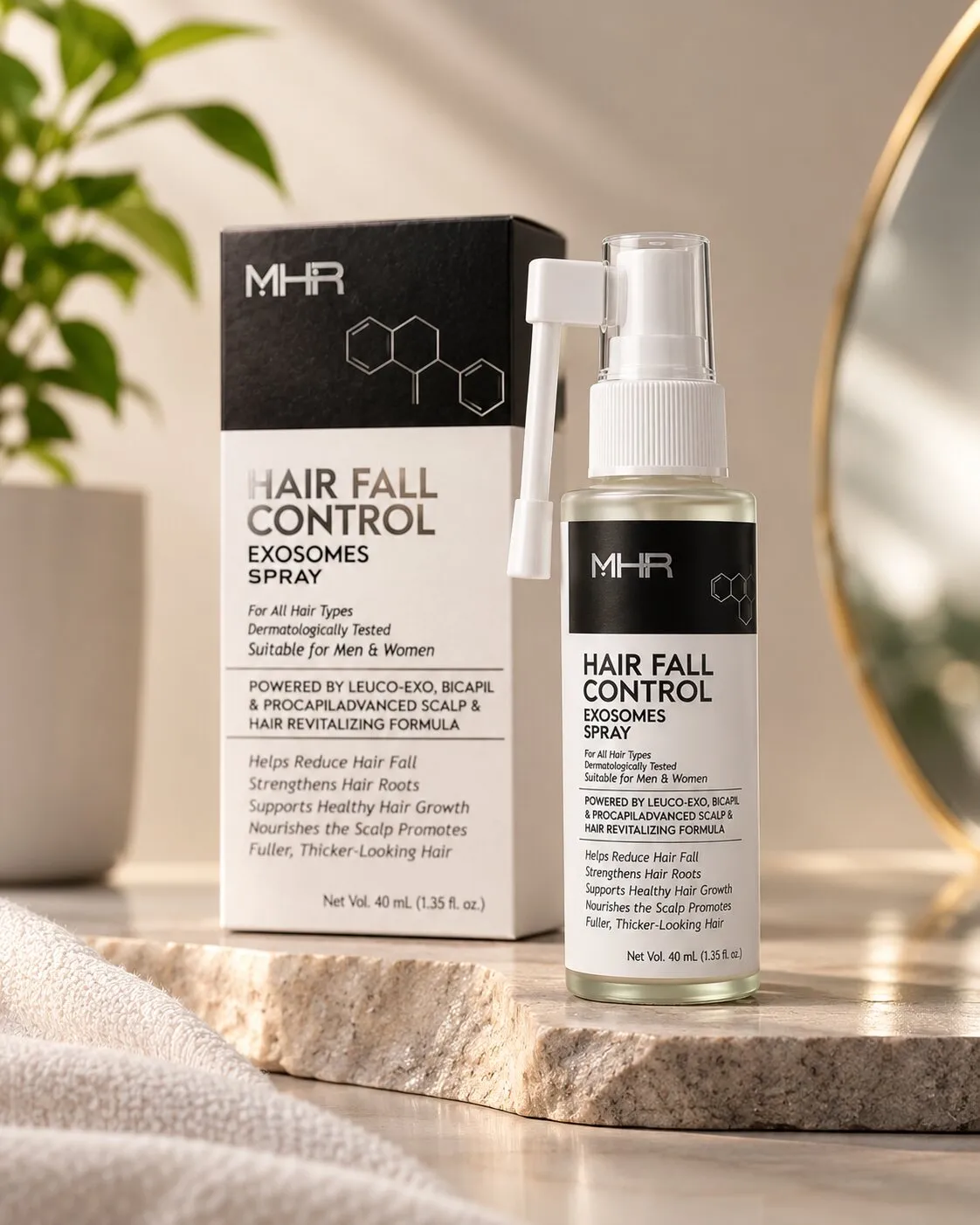
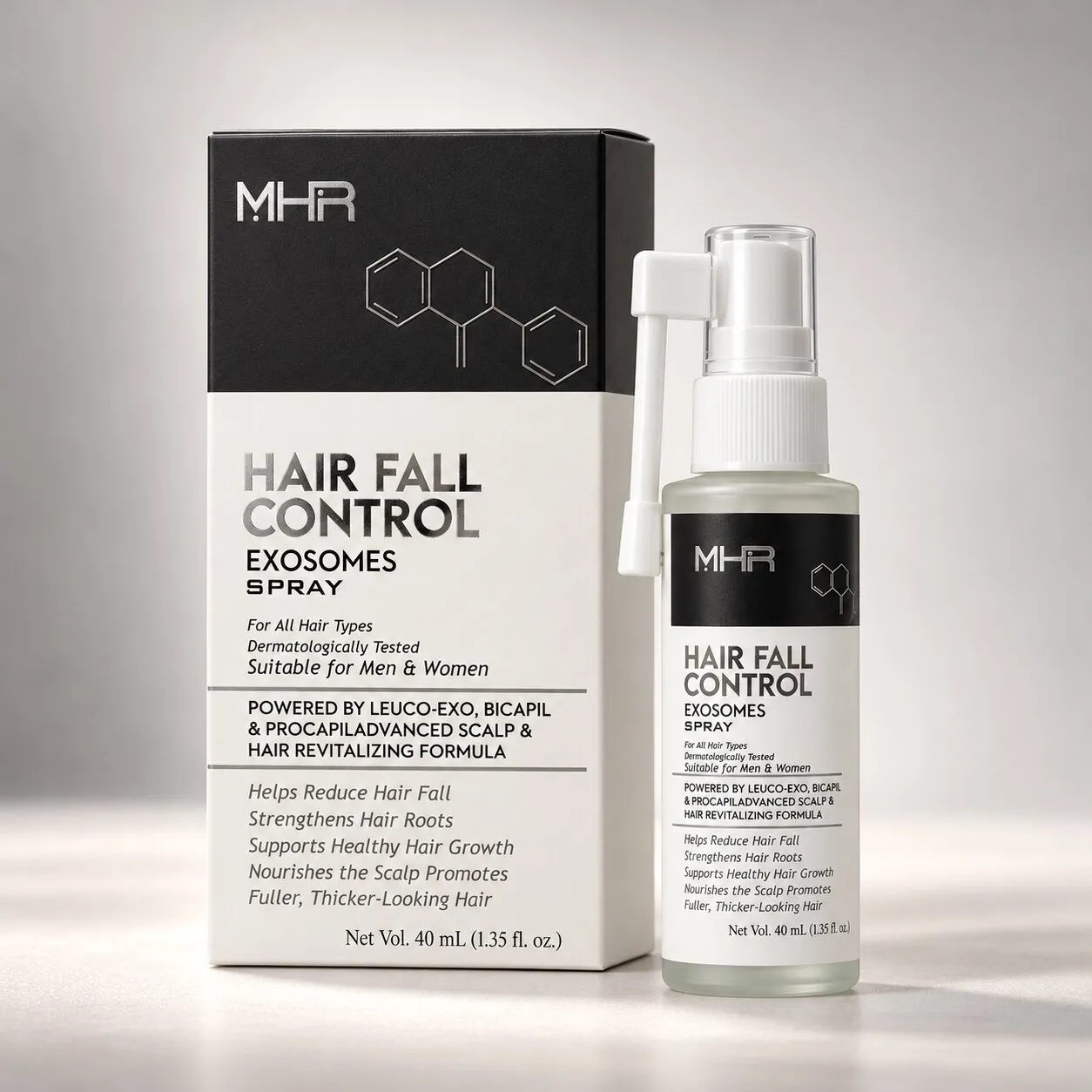
Our Hair Fall Control Exosomes Spray is a 40 ml leave-in spray made in the UK, with Leuco-Exo (Leuconostoc-ferment exosomes with ginseng and camellia), Bicapil and Procapil, plus niacinamide, panthenol, sodium hyaluronate and aloe. It's formulated to help reduce hair fall and support fuller-looking hair.
Hair oil vs hair fall spray at a glance
| Hair oil | Leave-in hair fall spray | |
|---|---|---|
| Where it goes | Mainly lengths and ends | Directly on the scalp |
| Main job | Conditioning, less breakage, shine | Daily scalp care with actives aimed at hair fall |
| Feel | Rich, washed out later | Light, left in, no rinse |
| How often | Once or twice a week, before washing | Twice daily, as directed on the pack |
| Limits | Little effect on shedding from the root | Cosmetic care; can't fix a medical cause |
How to use both together
Oil and a scalp spray fit together well if you give each its own time and place.
- Oil before washing: once or twice a week, apply a little oil to your lengths, and to the scalp if you like, an hour or two before you shampoo, or overnight.
- Wash gently: shampoo the scalp, condition the lengths and rinse well.
- Dry gently: wrap hair in a soft towel or T-shirt instead of rubbing, and keep heat low.
- Spray on a clean, dry scalp: shake well, part your hair and spray directly onto the scalp, focusing on areas of hair fall or thinning. Massage with your fingertips for 1–2 minutes. Don't rinse.
- Repeat the spray twice daily, or as directed by your healthcare professional.
Oil the scalp only before washing, never on top of the spray. Apply the spray once the scalp is clean and dry again, and keep any other oil to the lengths and ends. The spray is made for a clean, dry scalp, so a layer of oil on the scalp would sit between it and your skin.
Realistic timelines
Hair grows in cycles. At any time most hairs are growing, and around 15% are resting before they shed. A hair stays in that resting phase for two to four months before it falls and a new one starts. That means:
- Shedding often shows up about three months after its trigger, such as an illness or a very stressful event.
- That kind of shedding usually lasts three to six months, and hair tends to regain its normal fullness within six to nine months.
- Any routine, oil or spray, needs about three months of steady use before you judge it.
Common causes of hair shedding
- Major stress, such as a bereavement, job loss or caring for someone who is ill.
- Illness and high fever, surgery or childbirth.
- Diet: too little iron or protein, crash diets and rapid weight loss.
- Thyroid problems and other hormonal changes, including stopping hormonal medicine.
- Some medicines. Don't stop a prescribed medicine without speaking to your doctor.
- Hereditary thinning, which develops gradually and runs in families.
Hard water and heat styling get blamed often, but they mostly affect the hair shaft. Heat from hairdryers, straighteners and curling tongs causes dryness and breakage, and hard water can leave hair feeling rough. Neither is a usual cause of hair falling out from the root.
When to see a doctor
See a doctor or dermatologist if you notice:
- Sudden or very heavy hair loss
- Round bald patches or obvious thinning
- An itchy, sore, red or scaly scalp
- Shedding that lasts longer than about six months
- Hair loss alongside tiredness, weight change or other symptoms
A blood test can check for causes such as low iron or a thyroid problem. Our guide to hair fall causes and when to see a doctor covers this in more detail. You can keep oiling and using cosmetic scalp care alongside medical advice if your doctor agrees.
Common questions
Does oiling stop hair fall?
Oiling helps reduce breakage, so you may see fewer broken pieces. It isn't shown to stop shedding from the root, which usually has an internal cause.
Can I use a hair fall spray on oily hair?
Yes. A leave-in scalp spray is light and made to absorb without residue. Apply it to a clean, dry scalp.
Should I oil my hair every day?
Most people don't need to. Once or twice a week before washing is enough, and oil left on the scalp for days can build up.
Will a spray help patchy hair loss?
Round, patchy loss needs a doctor first, because it can be a sign of a condition such as alopecia areata. Ask before adding any cosmetic product.
This guide is general information, not medical advice. MHR products are cosmetic care and do not treat medical conditions. For persistent, changing or painful skin or scalp concerns, see a qualified doctor or dermatologist.
Sources
- Gavazzoni Dias: Hair cosmetics, an overview (International Journal of Trichology, 2015)
- American Academy of Dermatology: Do you have hair loss or hair shedding?
- American Academy of Dermatology: Hair loss, tips for managing
- American Academy of Dermatology: Tips for healthy hair
- British Association of Dermatologists: Telogen effluvium (patient information)
- NHS: Hair loss